Review Ireland’s Sport History at the TU Dublin Sporting Culture Symposium
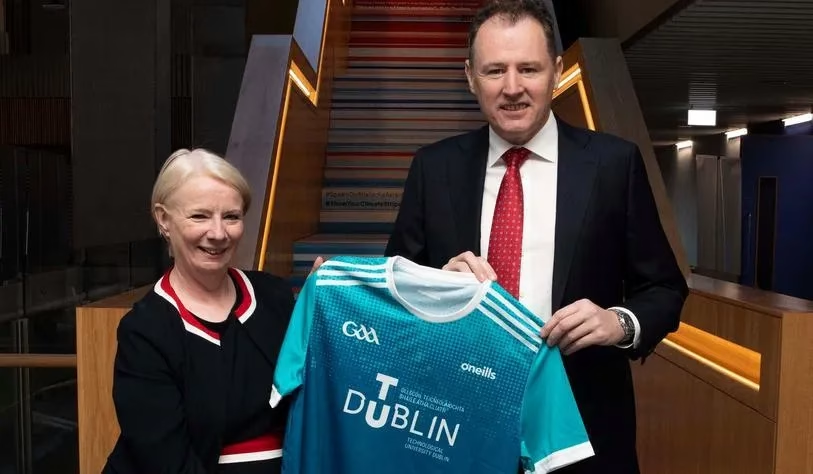
Recent news articles from Ireland have highlighted a significant gathering of academics, policymakers, and sports enthusiasts at the Technological University Dublin. The inaugural Sport History Symposium, titled Pitches & People: The Sporting History of Dublin and its Communities, took place at the TU Dublin Grangegorman campus. This event provided a comprehensive look at how sport history shapes the city’s identity, bringing together diverse voices to discuss the deep-rooted sporting culture of the capital. By examining the past, the symposium offered valuable insights into contemporary issues such as community development, social inclusion, and urban planning.
Understanding the Importance of Sport History in Dublin
Studying sport history goes far beyond recording match results or celebrating victorious teams. In a city like Dublin, sport has historically served as a primary vehicle for community cohesion, political expression, and social mobility. The symposium highlighted that to fully understand the evolution of modern Dublin, one must look at its playing fields, community halls, and local clubs. These spaces have long acted as vital hubs where neighborhood identities are forged and sustained across generations.
Researchers at the event emphasized that Ireland’s sporting culture is a rich tapestry woven from local traditions, international influences, and ongoing socioeconomic changes. By analyzing historical data, oral histories, and archival records, historians can map out how specific neighborhoods developed their unique sporting identities. This historical context is essential for policymakers and community leaders who aim to use sport as a tool for urban regeneration and public health today.
How Local Clubs Shape Ireland’s Identity
At the grassroots level, local sports clubs operate as much more than recreational facilities. They are often the heartbeat of a community, providing a safe space for youth development, volunteerism, and civic engagement. The discussions at TU Dublin underscored that the history of these clubs mirrors the history of Dublin itself. From the establishment of traditional Gaelic Athletic Association (GAA) clubs to the formation of soccer and rugby teams during the industrial boom, these organizations have adapted to the shifting needs of their local populations while maintaining a distinct sense of place and belonging.
Key Themes from the TU Dublin Symposium
The symposium structured its exploration of Dublin’s sporting culture around several core themes. Panel discussions and research papers dug into the nuances of community participation, sporting heritage, collective memory, and the spatial dynamics of sport within the city. By bringing together experts from various disciplines, the event painted a multifaceted picture of how sports intersect with everyday life in Ireland’s capital.
Community Participation and Social Inclusion
One of the most pressing topics addressed was the role of sport in fostering social inclusion. Modern Dublin is a highly diverse city, and its sporting culture must reflect that reality. Contributors from Sport Against Racism Ireland (SARI), including leaders and educators Azeez Yusuff, Taha Hassen, and Kerrie Clohessy, provided contemporary perspectives on how sport can bridge cultural divides. Their work demonstrates that inclusive sporting programs are critical for integrating new communities and combating discrimination, proving that the playing field remains a powerful space for equality.
The Role of Migration in Shaping Dublin’s Teams
Migration has always influenced Ireland’s demographic landscape, and its impact on sporting culture is profound. The symposium featured Irish basketball pioneers Ed Randolph and Jerome Westbrooks, whose decades of coaching, education, and community leadership have left an indelible mark on the city. Their personal histories highlight how migrant communities have not only participated in Irish sport but have actively shaped its direction and expanded its reach. Examining these narratives helps to challenge monolithic views of Irish history, revealing a more interconnected and globalized sporting past.
Notable Speakers and Academic Contributions
The academic rigor of the event was elevated by the presence of some of Ireland’s foremost historians and researchers. Professor Paul Rouse of University College Dublin, a highly respected figure in the field of sport history, provided overarching insights into how national trends manifest at the local level in Dublin. His work frequently highlights the political and social dimensions of Irish sport, providing a framework for understanding the presentations that followed.
Dr. Siobhán Doyle, a curator at the National Museum of Ireland and an established author, brought a material culture perspective to the symposium. Her expertise lies in understanding how sporting artifacts—ranging from historic jerseys to sporting equipment—tell stories that written records often miss. Alongside Dr. Doyle, University College Dublin historian Dr. Julien Clénet presented his specialized research on sport and public space in nineteenth-century Dublin. Dr. Clénet’s work is particularly relevant for understanding how the physical layout of the city dictated where and how working-class citizens engaged in recreation during a period of rapid urbanization.
Additional academic contributions came from sports historians Dr. Conor Curran and Dr. Cormac Moore, TU Dublin media lecturer and sports researcher Anna Maria Mullally, and Dictionary of Irish Biography editor Terry Clavin. Together, these scholars demonstrated the breadth of methodologies used in sport history today, ranging from digital humanities and media analysis to traditional archival research.
Bridging Academic Research and Real-World Impact
A recurring theme in the presentations was the necessity of bridging the gap between academic research and real-world application. Opening the symposium, TU Dublin President Dr. Deirdre Lillis emphasized the university’s ethos of connecting academic inquiry with tangible community impact. Historical research should not exist in a vacuum; it must inform how sporting organizations operate, how public spaces are designed, and how funding is allocated to promote active lifestyles. By bringing policymakers and community leaders into the same room as historians, the symposium facilitated the kind of cross-sector dialogue necessary to turn historical insights into actionable public policy.
TU Dublin’s Commitment to Contemporary Sporting Culture
Hosting a symposium on sport history is a natural fit for TU Dublin, an institution that boasts a robust and active contemporary sporting culture. Dr. Lillis noted during her opening remarks that the Grangegorman campus itself holds an enduring sporting legacy, with organized sport having been played on the site for more than a century. This historical continuity provides a unique backdrop for discussions about the past, present, and future of Dublin’s sports.
Today, TU Dublin supports 34 active sports clubs, catering to a wide array of interests from traditional Irish sports to martial arts and water polo. The university boasts more than 5,000 student memberships and facilitates over 2,100 sporting events annually. This high level of participation reflects a deep institutional commitment to student health, excellence, and inclusion. The infrastructure and support systems currently in place at TU Dublin serve as a modern extension of the historical sporting traditions discussed at the symposium, proving that the university practices the values it researches.
Why Sporting Culture Matters for Future Generations in Ireland
Preserving and studying sport history is vital for future generations. As cities modernize and public spaces become increasingly contested, understanding the historical relationship between urban environments and physical activity can guide better city planning. Furthermore, in an era where digital entertainment often supersedes physical play, looking back at how communities historically organized around sport can offer solutions to current crises of physical inactivity and social isolation.
The narratives explored at the TU Dublin symposium—ranging from the struggles of early grassroots clubs to the modern challenges of integrating diverse populations through sport—provide a blueprint for future community building. They remind us that sport is a fundamental aspect of human culture, capable of expressing collective joy, grief, resistance, and aspiration.
The Future of Sporting Heritage Research
The Pitches & People symposium at TU Dublin marked a significant milestone in the formal study of Ireland’s sporting past. By gathering leading historians, community advocates, and sporting pioneers, the event successfully highlighted the complexities and triumphs of Dublin’s sporting culture. It demonstrated that news articles focusing solely on current affairs often miss the deep historical context that explains why sport matters so deeply to the Irish public.
As research in this field continues to grow, institutions like TU Dublin will play a crucial role in archiving this heritage and making it accessible to the public. The insights generated from such symposiums have the power to shape educational curricula, inform government policy on sports funding, and inspire local communities to reclaim their historical sporting spaces. For anyone interested in the intersection of history, sociology, and athletics, the ongoing exploration of Dublin’s sport history offers a wealth of knowledge and practical applications.
Take the Next Step
Ready to start your studies at TU Dublin? Our expert advisors are here to guide you through every step — from choosing the right program that matches your goals to supporting you through the application process and preparing for student life in Ireland.
Fill out the form today to schedule your FREE consultation with one of our study abroad experts and take the next step toward your future with confidence.