Trinity College Dublin Henry Grattan Lecture: Tom Fletcher on the Collapsing International Order
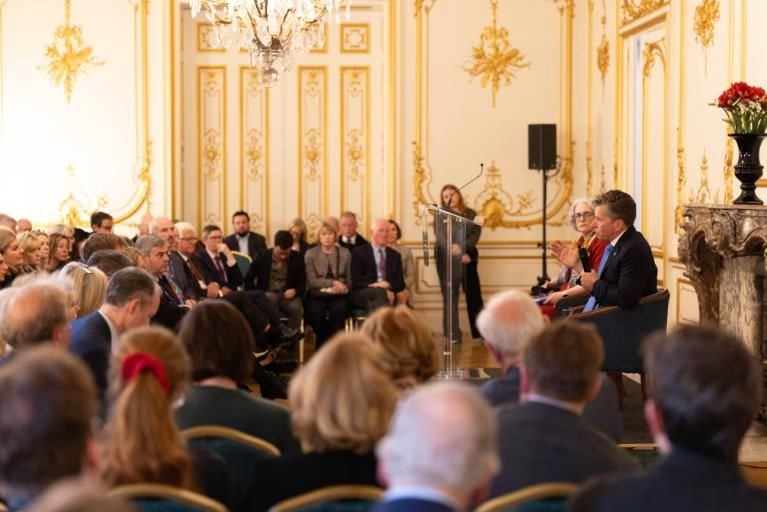
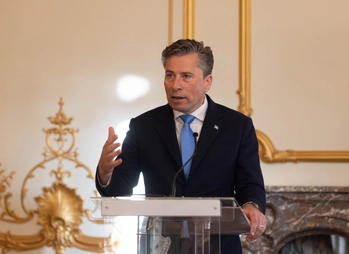
The 2026 Henry Grattan Lecture, hosted by Trinity College Dublin, provided a critical platform for examining the state of global affairs. Delivered by Tom Fletcher, the United Nations Under-Secretary-General for Humanitarian Affairs and Emergency Relief Coordinator, the address offered a sobering yet ultimately hopeful assessment of the current international order. Held at the Embassy of Ireland in London, the event gathered Trinity alumni, diplomats, and media professionals to discuss immigration, global instability, and the moral responsibilities of citizenship.
The Current State of the International Order
Tom Fletcher’s remarks were grounded in extensive first-hand experience drawn from crises in Gaza, Darfur, Kabul, Haiti, and the Democratic Republic of Congo. Rather than speaking in theoretical terms, he presented a stark, evidence-based assessment of global upheaval. Fletcher argued that for millions of people worldwide, the international order is not on the brink of collapse—it has already collapsed.
“What we are going through right now is not a drill,” he stated, urging the audience to abandon complacency and face the scale of current global crises with renewed seriousness. This direct approach highlighted the necessity for institutions, governments, and individuals to adapt to a rapidly shifting geopolitical landscape where traditional frameworks for peace and security are increasingly insufficient.
Addressing the Coming Age of Migration
A central theme of the lecture was the impending scale of global migration. Fletcher cautioned that the world is approaching an “age of migration at a level never seen before.” This prediction is driven by a confluence of factors, including protracted armed conflicts, economic instability, and the accelerating impacts of climate change.
In discussing immigration, Fletcher invoked the legacy of Henry Grattan, the 18th-century Irish parliamentarian for whom the lecture series is named. He reminded the audience that those who suffer in these crises are “not the other, but a part of us.” This framing challenges the increasingly prevalent narratives that seek to isolate or dehumanize migrants, advocating instead for a perspective rooted in shared humanity and historical solidarity.
Historical Ties Between Ireland and Britain
Fletcher opened his address not with statistics, but with a personal narrative that illustrated the complex, enduring connections between Ireland and Britain. He shared the story of his English grandfather, who sailed back to Liverpool a century ago after falling in love with his Irish grandmother. Fletcher recently discovered decades of their correspondence, including a letter his grandfather wrote at age 22 while looking back toward a lighthouse where his grandmother watched his ship depart.
His grandfather wrote: “never think of the Irish Sea as something that divides us, but as something that connects us.” This intimate historical anecdote served as a powerful framing device for the evening’s discussion, demonstrating how personal relationships and geographic proximity can bridge national divides—a relevant metaphor for addressing broader international fractures today.
The Moral Responsibilities of Citizenship
Beyond analyzing geopolitical trends, the 2026 Henry Grattan Lecture focused heavily on individual agency. Fletcher called on each person in the audience to become part of a “movement of great ancestors.” This concept is grounded in three core principles: solidarity, curiosity, and kindness.
In an era often characterized by political polarization and cynicism, Fletcher emphasized that choosing humanity, connection, and moral ambition is itself an act of leadership. The moral responsibilities of citizenship, he argued, extend beyond voting or paying taxes; they require active engagement with the struggles of others and a commitment to leaving the world in a better state.
Finding Hope in Uncertain Times
Despite the gravity of his assessment regarding the international order, Fletcher brought a distinct sense of optimism to the lecture. He encouraged the audience to look for “everyday hope.” This hope is not found in grand, sweeping political gestures, but in fundamental human actions: raising children well, caring for strangers, and maintaining a commitment to incremental positive change.
The goal, as he articulated it, is to leave the world “in slightly better shape than we got it.” This pragmatic, grounded form of hope offers a counter-narrative to both doomerism and naive optimism. It suggests that even when facing systemic global failures, individual and collective actions retain significant meaning and impact.
The Legacy of the Henry Grattan Lecture Series
The Henry Grattan Lecture series is an initiative of Trinity College Dublin’s School of Social Sciences and Philosophy. Hosted in London since 2013, the series serves as a consistent reminder of the College’s commitment to public debate, ethical leadership, and international engagement. By bringing high-profile speakers to discuss pressing global issues, Trinity provides a valuable forum for discourse outside the traditional academic setting.
Tom Fletcher joins a distinguished list of past speakers, reflecting the high caliber of the series. Previous lecturers have included former UK Secretary of State for Foreign Affairs David Miliband, former British Prime Minister Sir John Major, former Vice-Chancellor of Oxford University Professor Louise Richardson, former Taoiseach John Bruton, EU Commissioner Mairead McGuinness, former President of Ireland Mary McAleese, and Mario Draghi, the former President of the European Central Bank. This history underscores the lecture’s role as a significant event in the diplomatic and intellectual calendars of both Ireland and the UK.
Why Global Discourse Matters for Ireland
For Ireland, engaging with discussions on the international order is not merely an academic exercise. As a nation with a significant diaspora, a history of emigration, and a growing role in international organizations like the UN and the EU, Ireland has a direct stake in how global migration and humanitarian crises are managed. Events like the Henry Grattan Lecture allow Irish institutions to contribute to and shape these vital conversations on the global stage.
Thinking About Studying at Trinity College Dublin?
Fill out the form to receive personalized guidance from a Studygram expert counselor. You’ll get support with choosing the right program, understanding admission requirements, preparing documents, and completing the application process smoothly. Start your journey at Trinity College Dublin with confidence and expert support.