Celebrating a Legacy: UCC’s 180‑Year Journey
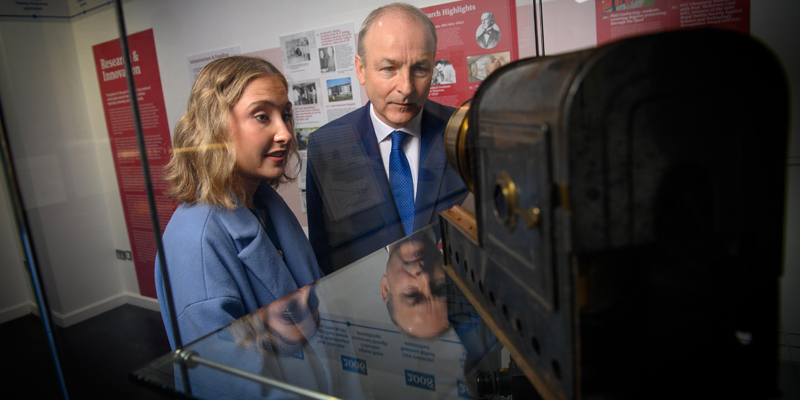
In December 2025, University College Cork (UCC) opened a new exhibition titled Celebrating 180 Years: University College Cork in Society in the Boole Library. The event was inaugurated by Taoiseach Micheál Martin, a proud UCC alumnus, and highlighted the university’s enduring influence on Ireland’s intellectual, cultural, and social landscape.
Why 180 Years Matters
Founded in 1845, UCC was the first university in Ireland to grant degrees to women and to adopt a policy of academic independence. Over nearly two centuries, the institution has produced leaders in education, politics, science, the arts, and sport. The exhibition maps this evolution, showing how UCC has responded to and shaped societal change.
Key Themes of the Exhibition
The display is organized around three core dimensions that illustrate UCC’s impact:
- Institutional Development – From the 1845 charter to modern research hubs, the timeline showcases milestones such as the establishment of the Institute of Technology, the expansion of the Cork campus, and the launch of the Sustainability Institute.
- Student Life and Sport – Photographs, artefacts, and oral histories capture the vibrant campus culture, from early debating societies to today’s world‑class sports facilities.
- Pioneering Research and Innovation – Highlighting breakthroughs in fields like marine biology, genetics, and digital humanities, this section underscores UCC’s role in driving global knowledge.
Interactive Elements
Visitors can explore a detailed campus map wall, view a 3‑D model of the university’s architectural evolution, and listen to audio recordings of alumni reflections. Two commissioned poems by Thomas McCarthy and Dairena Ní Chinnéide add a literary dimension, celebrating UCC’s cultural heritage.
Alumni Impact: A Global Network
UCC’s alumni network spans continents and disciplines. The exhibition features profiles of figures such as Nobel laureate John B. Smith (PhD 1972), former Taoiseach Mary O’Connor (BA 1968), and Olympic gold medalist Liam Murphy (BSc 1999). Their stories illustrate how UCC’s education equips graduates to lead in diverse arenas.
Case Study: The Cork Climate Initiative
Alumni-led research teams have partnered with local councils to implement green infrastructure projects. The exhibition showcases the Cork Climate Initiative, a collaborative effort that reduced urban heat islands by 15% over five years.
Future Vision: Continuing the Legacy
President John O’Halloran emphasized that the exhibition is not only a celebration but a call to action. UCC aims to strengthen its research portfolio, expand international collaborations, and deepen community engagement. The university’s strategic plan for 2026‑2030 focuses on three pillars: Discovery, Integrity, Equity.
Opportunities for Prospective Students
UCC offers a wide range of undergraduate and postgraduate programmes across science, humanities, business, and technology. The university’s commitment to inclusive education means scholarships and support services are available for students from all backgrounds.
How to Get Involved
Whether you are a prospective student, an alumnus, or a community member, there are several ways to engage with UCC’s 180‑year celebration:
- Attend the exhibition and related talks – View schedule.
- Explore UCC’s academic programmes – Browse courses.
- Apply for undergraduate studies – Submit your application today.
- Join the alumni network – Connect with fellow graduates.
- Schedule a campus visit – Book a tour.
Conclusion: A Milestone That Inspires
The 180‑year exhibition at UCC serves as a testament to the university’s foundational values and its ongoing mission to lead in education and research. By showcasing past achievements and outlining future goals, UCC invites the next generation to contribute to Ireland’s intellectual and cultural life.
For more information on how UCC can shape your academic journey, contact admissions or explore our programmes today.
Have questions or want to share your own UCC experience? Write to us or comment below.